What is Madness?

Uncategorized

bangour

Madness is Terrorism

I am dangerous. My brain is twisted in a way that makes me a danger to myself and others. The horror – you’d have to be mad to do something like that – becomes the fear – if you’re mad, you’ll do something like that. Violence and madness are defined in each other: if I’m mad, I’m going to be violent; any violence that isn’t allowed is madness. And any violence that is socially permitted isn’t violence, but for my own good. I’m a terrible risk, and so I need to be cut out of society. I am a terrorist.

Madness is Neurosis

I am messed up. Through some trauma, some event or series of problems, I can’t react to the world in a whole and healthy way: I act out, I have defence mechanisms that hurt me and people around me. I have unhealthy desires that get in the way of my wellbeing. I need to be helped. If I talk it through enough in the approved way, I’ll identify my trauma, come to terms with it, and find better ways to be in the world. I am a neurotic.

Madness is Laziness

I am a scrounger. I can’t be bothered to earn a wage like the rest of us, so I’m scamming other people. I’m manipulative, looking for any way to get cash that doesn’t involve lifting a finger. I rip off the state and I leech off my friends and family. Don’t help me: you’re enabling me to indulge myself and I’ll never get better that way. I need to pull myself together. I need some tough love: if you take the support I don’t deserve away from me I’ll learn to stand on my own two feet. I am lazy.

Madness is Invasion

I’m not myself. Something has got into me, something has changed me. Maybe it’s demonic possession; maybe it’s a terrible illness; maybe it’s a manipulative friend. Something from outside of me is hurting me. It’s not my fault. We need to find out what it is and get rid of it: exorcise the demon, cut out the tumour, leave the abuser. I am invaded.

Madness is Insight

I am special. I am a shaman, a magician, an artist, a traveller. My unique brain gives me a powerful perspective on the world that you can all learn from. Sometimes it’s scary for you and sometimes it’s painful for me, but we need to honour my fire. If I embrace my gift, I will learn how to manage it; if you respect my energy, you will learn how to love it. I have so much to offer. I am insightful.

Madness is Generational Malaise

I am a Millennial. My whole generation is pathetic. We have been taught to have far too high expectations by our coddling parents; we all think we’re special and can’t stand anything difficult, any struggle. Or else our brains have been reshaped by constant connectivity, by staring at screens too much and too long, by always being worried about what our friends are thinking, by always projecting the perfect image of ourselves, so that we can’t can’t settle, can’t accept ourselves. I need to switch off. Grow a pair. Calm down. Get real. Get married. Get a job. Grow up. I am my generation.

Madness is Difference

I’m not like you. Something about my brain, my body, my mind, diverges from the norm and makes me a minority in society. People don’t understand me, and society is set up to disadvantage, disregard and disempower me. Anyone who’s not normal gets punished, and that’s why I hurt. You need to accept me; you need to make space for me; you need to understand how I am and support me in building a society that looks after everyone, no matter how strange they are. We should destroy the whole idea of normal. I am different.

Madness is Disorder

I’m not working properly. My mind is out of whack with how we all think it should be, and that’s hurting us. Perhaps it’s a twist in my synapses; perhaps I’m missing a part of my brain; perhaps I’ve learned the wrong lessons from life; perhaps the drugs have messed with me too much. I need experts to work out exactly what’s wrong with me through the correct identification of symptoms in a rigorously organised system which will also outline the advised courses of treatment. There is hope, but I might be incurable. I do not fit the order, and I should. I am disordered.

Madness is Chemistry

I have a brain that’s gone wrong somehow. My neurotransmitters are misfiring, or something like that. I need to experiment with different treatments to get the chemicals in my brain back to levels that won’t hurt me, that will stop me behaving so strangely, so badly. I should try drugs, I should try yoga, I should try eating better, I should try CBT, I should try turning off all electronics before I try to go to sleep, I should get more exercise, I should try different drugs. I am my chemistry.

Madness is Capitalist Kyriarchal Oppression

I have been broken by the system. Our economy uses up workers until they can’t work any more: I’m all used up. I am constantly being sold new desires, constantly being told to buy a better way to be, so no wonder I’m unsatisfied. I am at the bottom of the heap, so no wonder I’m sad. I have to keep finding new people to exploit me in case I fall into poverty and disaster, and I’m shackled by a system designed to keep me in want, so no wonder I’m scared. Our society forces people into boxes so as to better exploit them, so no wonder I’m trying to break out. My society is trying to kill me, so no wonder I’m fighting back. I am fighting back.

Madness is Ambiguity

I am a mess. I have ideas of madness that work together and contradict each other. They overlap; they muddle together to create new ideas of what madness is. They argue against each other. They all live in society, and they all live in me. Some of them make me hurt more, and some of them help me find ways to hurt less. Sometimes an idea of madness that helped me hurt less turns round and bites me; sometimes an idea of madness that I’ve railed against turns out to have something useful in it. In order to survive being mad, I need to be able to shift between these ideas of madness.

What does it mean, to madden a thought? To make a theory mad? Madness is both irrationality and the excess of rationality, which, in my society, brewing up a muddle of bias, logic and pragmatism to call just common sense, is the same thing. To be mad is to think too hard, to not think enough. To be mad is to be unable to live with just one idea of how you are, how you should be: there is no idea of madness which is wholly liveable. I drift back and forth between these worlds; in the acceptance of that oscillation, I’ve found, is something like coping. To be mad – or to be mad well – is – I think, I guess, I suggest – to embrace that madness and madness and madness are irreconcilable. I am ambiguous. I am mad.

* * *

These ideas and their theoretical basis owe much to the work of Darcy Leigh, and to dozens of mad conversations about how best to be alive.

For further reading on radical and mad-centred approaches to mental health, all of which have shaped my understanding somehow, see:

What Can Poets Do About Robots?

Poetry, Rambles

Turk-engraving5

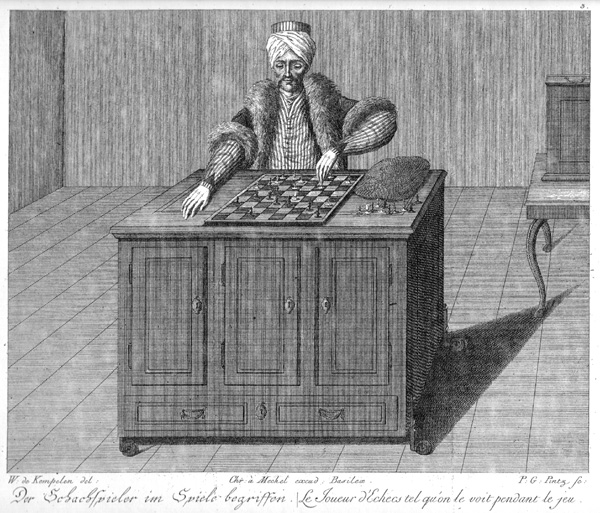
Robots have been writing poems for quite some time; indeed, robots have been writing fairly good poems since at least 1984. Conceptual poets and uncreative writers are either terrified or elated by the capacity of robots to outdo their most extensive combinatorial, processual and appropriative work; small advances are being made on automating formal metrical and rhyming schemes; and at least one robot is sufficiently good at the contemporary undergraduate Anglo-American lyric to pass unnoticed in its publications. However, thus far, the best robots are generally worse at impersonating human poets than the best (or worst) human poets are at impersonating robots, and so committed humanists might still be sceptical of robots’ capacity to truly write poetry.

One robot, however, has solved at least one poetic form: poem.exe is the greatest writer of haiku I have yet read. Combining the best of traditional insight and contemporary reference, poem.exe’s work consistently delivers the intuitively accurate observation and wisdom through juxtaposition central to the haiku form. The general problem of how to write haiku has been solved to perfection: all that remains to human poets is learning how to write specific haiku for specific moments, learning the discipline of haiku purely as a craft and a means of world- and self-understanding – innovation, newness and progress need no longer be a drive.

What does this success mean for human poets? Beyond combinatorial, processual and appropriative poetics (which were always imitations of roboticism in the first place), the haiku is the first poetic form to be solved; what this success means, however, is that more forms will soon fall before the robots. The general problems of the limerick, the  nonet, the ottava rima – these are only a matter of time. How can human poets defend their labour, and how can they find their reasons for writing? The answers will change as the robots march on:

1. Eke Out The Forms

It is not easy to solve a poetic form. This means that poets have a grace period, perhaps lasting a century or two, in which they are better at writing some poetic forms than robots. We should make the most of this while we can. Some truly lovely villanelles, homophonic translations, erasures and puSlogh vaghs are waiting be written before the robots master them, and indeed human mastery of these forms may be necessary in order to gain the skills required to write the robots that will master them. (The renegade reactionary poet will thus notice a further available strategy: to refuse to master forms, in order to slow the robots’ own mastery. In the end, this strategy leads only to refusing to write poetry at all, which, though it may be the preferred outcome for many, is likely not the intention of the renegade reactionary poet.) Running before the tidal wave has its pleasures, and the inevitability of defeat is grimly charming, but poets may desire more, and so must:

2. Invent New Forms

It has long been the pleasure of poets to invent new forms. In the age of robot poets, this task acquires new urgency. As the robots lag behind mastering the forms of yesteryear – the sonnet, the sestina – poets can proliferate new forms, inventing them, creating deeper understandings of the world through them, even exhausting them until they are rendered cliché, perhaps, before the robots catch up. But the robots will catch up. For a time, as artificial intelligence develops, new forms will proliferate faster than robots can solve them, but eventually the speed of the robot mind will be such that not only will forms be solved faster than they can be invented by humans, but also robots will learn how to author new forms themselves, rendering this area of human activity, like the authoring of poems, redundant. The only response can be to:

3. Write the Robots

Learning how to write robots is a task I have begun myself, and it is hugely satisfying. I can testify that the writing of robots is a poetic task: it requires learning how to manipulate a set of linguistic elements within a set of constraints to produce desired effects when performed for an audience. By writing robots, poets acquire, for a time, the satisfaction of being better than robots. Instead of running ahead of the robots, or fighting against the robots, we become the people furthering the cause of artificial poetic intelligence; instead of mastering the forms of poetry, we master the masters of form. Moreover, as with many current cases, the task of selection and curation will fall to humans: robots will write beautiful concrete poems before they will be able to tell that they have done so, and will require guidance to distinguish between poor, fair and perfect concrete poems before that form too is solved. This pleasure may, in its turn, last a good century or two. But, in the end, inevitably, someone will write a robot that is better than humans at writing new poetry robots, and this activity, too, will be taken away from us. Humans will thus:

4. Become Only Political

The problem of poetic form will be solved before the problem of life. Robots will master ghazals and sound poems before they can make all society loving, equal, joyous and just. That will remain the task of humans even when all the best poems are written by robots, and we must rise to it. We must perceive the inequities of the world, and write the poems that intervene in just the right way at just the right moment to make some small step towards something better. Poems that speak a truth, poems that crack a joke, poems that set off a bomb, poems that nurture a tired struggle, poems that rouse and rabble. Our poems may be awkward, they may be stumbling, they may be unsure, and they will certainly be less graceful and perfect than the poems the robots are writing, but they can advance the cause of the good in a way the robot poems cannot, because, for a time at least, the robots will not be able to perceive and construct the good. For a time. The skills require to write, select and curate perfect poems – and the resources to build the robots to acquire them – will surely lead to something better, won’t they? Once robots have bested us at poetry, I hope they will turn their attention to society, because we have done a fairly poor job of it so far. At that point, the character of the robot mind will be indistinguishable from that of a human mind, except faster, unless it engages a voluntary slow-down; indeed, humans may incorporate robot minds into their own flesh bodies, if only to write better poetry. Let the poetry robots manage our society for us, let them bring about post-scarcity, equality, community and care, because then we can:

5. Become Only Personal

With the task of a fairer society complete, and with the distinction between robot and human minds porous and enlivening, consciousness can turn itself fully towards self-care, self-expression and self-fulfilment. Freed from the imperative to always make poetry better and new, we can make poetry for ourselves again; freed from hierarchies of fame, success and labour, art for art’s sake might finally be possible; freed from scarcity, “everyone is already an artist” might finally be meaningful. All of this is to say: teenagers will write darkly gothic poetry without shame, will pour their feelings into dodgy rhymes because they need to, will discover ways to discover new things about themselves without mediating that process through editorial selection. It will no longer matter that there are hundred thousand poems about the quiet revelations of mediocre suburban lives, because there will be no need for anything else, and even the suburbs will be beautiful. The task of the poem will be only to care for the poet; the poem will be written because it needs to be written; the accuracy, immediacy and delight of self-expression will be celebrated in small, nurturing circles of poets and friends. This is more or less indistinguishable from poetry before robots began, but the world will be better, and so the poetry will in fact be completely different.

Whit tae write nou?

orkney, Poetry

ferryleaving

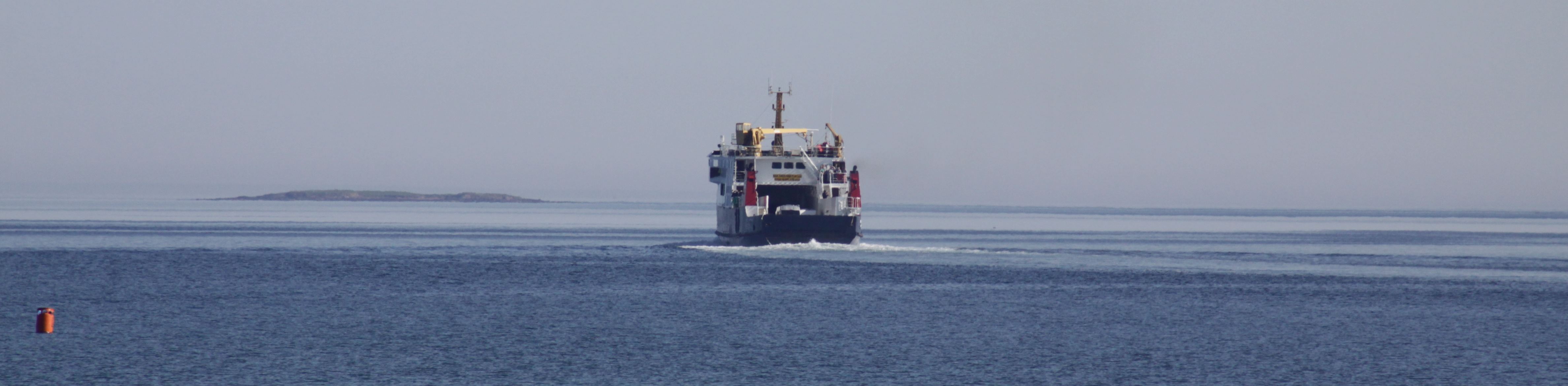
A’m leavan Orkney. A’m writan this nou on the train sooth fae Aberdeen, eftir a calm crosseen doun fae Kirkwall. Wather-wise, hid’s no been much o a summer – rain an cauld aa the wey – bit the eveneen wis bonnie: a douce blue-grey sky wi saft layers o clood, an a brief wash o pink whan the sun gied doun. A’ll be missan the islan lift: i the city, thir’s less o hid tae see fer biggeens, an whit thir is deusno hae the scope an variety o an archiepelago’s mony-wathered skies.

A’m spent fower months back haem researchan an writan in Orkney language. A startid wi waakan an taakan an listenan: rediscoveran the landscape o haem, learnan fae the fock aareidy deuan grand wark i the Orkney language, an trainan me lugs tae hear the differs atween dialects an figure hou best tae write them doun. The twa month by, hid’s been less aboot the research an more aboot the writeen: A’m been tryan tae wirk oot whit A want tae write wi this wirds, this tongue.

Thir’s an aye-bidan fankle fir fock wirkan in minority languages, especially languages closs tae the globally-dominant Engliesh: hid’s hou tae mak the wark no cheust aboot the language, an no cheust aboot the piece the language cams fae. Whan yir language is merkid – whan hid registers first as a language at isno Standard Engliesh – aa ye write chances at bean raed as bean a commentary on the language, a commentary on Engliesh. An acause yir writan in a language at’s unner thraet – A’ll no say diean, fir at’s unhelpfully fatalistic – an in wirds ye miss hearan, yir wirk affens tends tae the elegaic an nostalgic, tae dulefu hiraeth. An acause yir writan in the language o haem, the language at means haem, the first thing ye think tae write aboot is haem – an than hid’s herd tae brak oot. An aa this is compoondid bi the tradietion yir writan in: in Orcadian, as in ither firms o Scots, the majority o the wark at’s gien afore is elegaic writan aboot language an haem.

Nou, that’s no tae say this subjecks is bannid, at we shadno write about them ony more. Thir necessar subjecks, vital tae the minority language experience: language nostalgia forders language memory an reclamation; writan about haem brings a pride in haem at can strengthen the language; writan about language howks intae yir awareness o hid’s ebbs an flowes an chaenges an interactions wi the dominant tongue. Bit hid is tae say at this subjecks maan bi pert o a wider literature, at wir language is fecksome an rich enof tae tackle ony subjeck ye fancy.

Friday by, A organised wi Simon Hall an Alison Miller an event caad Rashy Bulder’s Big Night Oot. (Here’s the history o the naem.) Hid wis a celebraetion o the Orkney tongue, a gatheran o dialect writers tae perform thir wark. Wir absolutely delightid wi the result: wi haed a fill aadience, a grand bill o writers, an enthusiastic reception – an most o aa, the night wis lippan wi a sense o optimism aboot Orkney dialect, a widespried feeleen at wir reachan a tippeen pynt fir a nyow renaissance o wark. Fir me, whar that showed clearest wis in the raenge o wirk at wis performed.

Thir wis plenty o wirk about language, bit hid wisno aa aboot wirds at wir tint: hid wis affens aboot lukkan at the wey fock ir spaekan nou, hou Orcadian is interactan wi Engliesh nou, or hou attitudes tae Orcadian ir chaenged ower time. Thir wis plenty o wirk about haem, bit hid wis as much aboot haem nou as haem by. An thir wis a bonnie bit o nostalgia, bit thir wis gey more lukkan tae the future. Ootower aa that, thir wis plenty o writan at wisno aboot Orkney at aa!

Fir mesel, A still struggle wi hou tae mak that brak, hou tae shift me mind tae uiss Orcadian tae taak ayont Orkney. Fir whan yir language is merkid, hid’s nivver cheust aboot hou ye see hid yersel: hid’s aboot hou ithers see hid teu. Whitivver A write, fock ir gaan tae see hid as wrote in Orcadian, an so read hid as in pert aboot Orkney.

Thir twa weys A’m find fir fock haean the saem struggle at help unthirl wir language fae hidsel. The first is tae wirk at translaetion. This is hou A startid writan in Orcadian in the first piece, tryan me haand at translaetions o the Daode Jing. Hid’s a grand wey tae laern hou tae uiss a haaf-familiar language, fir hid maks ye pey that muckle attention tae ilka wird chyce (an gies ye whit excuse ye need fir uissan dictionars an thesauruses), bit hid pushes ye ayont that aesy subjecks forby. Steid o startan in Orcadian an than tryan tae gar yersel intae new subjecks, ye stert in a new subjeck an than hae tae speir whit Orkney haes tae say aboot hid, whit nyow perspectives an inflections Orcadian offers. Hid gars ye write in Orcadian aboot things ye’d nivver itherweys o wrote aboot.

The seicond wey A’m find is tae mak a fantastiecal laep intae anither warld. Fantasy warlds, science fiction warlds, parallel warlds, magiecal warlds. Hid’s notable at the only fill-length novel wholly wrote in Scots at A ken o is Matthew Fitt’s But n Ben A-Go-Go, set in a fleudid future Scotland. Projectan forrid intae the future (or across intae fantasy) allous ye tae mak wild guesses aboot whit language might deu i the time in atween. Ye can jummle yir language wi neologisms an mell dialects ithoot faer o bean inaathentic, fir yir settan the reuls o whit future aathenticity is. Ye can be utopian aboot language polietics, imaginan a future whar language diversity haes thrived, steid o a future whar Engliesh haes erodid aathing ither. (By the wey, hou langsom hid is at sci fi haes fir the most pert sattled on the Universal Translator device steid o actually thinkan throu hou languages an language polietics might chaenge i the future: beuys, the Babel fish wis a fun, no a prediction!) Steid o bean the primary focus, the language yir uissan is nou a metaphoriecal layer: ye can write aboot haem ithoot writan aboot haem, ye can force the reader tae think ayont yir language ithoot hidan yir language, ye can bide i the doubleness at’s ert an pert o takkan the minority position.

Ya, hid’s a doubleness at’s at the hert o hid. Ye want tae brak free o the constraints o yir heritage, bit ye want tae pey yir respecks teu. Ye want tae be seen as more as cheust whar yir fae, bit ye want tae be fae thir teu. Ye want tae write ootower yir language, bit yir aye writan in yir language. Ye want tae write anent Engliesh, bit yir aye writan anent Engliesh. The Scots “anent” is right here, fir hid translates tae the Engliesh “against”, bit hid means “in front o” or “i the face o” forby: hid intrinsically acknowledges at whan yir writan against sometheen yir defined bi hid teu.

Hid’ll be a peedie while afore muckle o me nyow writan is oot in publiec: A’m still shappan hid, still makkan hid. Bit hid sterts fae this twa pynts: translaetion an imaginaetion as weys o brakkan ootower the prescribed limits o yir language, as weys o pushan that limits, as weys o endan that limits. Eventually, A hope, A’ll be writan in me language ithoot e’en thinkan aboot writan in me language – the saem thing as ayewis thinkan aboot hid. The goal o me language polietics is fir this tongues tae become both transperent an opaque.

image by Mark Braggins