Undertow: A Provocation for the Scottish Artists Union

Uncategorized

(I was asked to create a provocation for the Scottish Artists Union AGM, on 28th September 2014. I responded to the brief knowing this would be recorded before the Independence Referendum (on 18th September) but screened after the event.)

I’m talking to you from Govanhill Baths, the community arts, social and wellbeing centre in the south side of Glasgow. I was artist-in-residence here in 2013, creating new work about the past, present and future of the Baths, and working with the community to put on new events. I love this place. I love the smell of it, I love the decaying history and hopeful future of it, and I love what it stands for.

The Baths were opened just over 100 years ago today, and were a vital local resource. There were three swimming pools, a steamie for laundry, slipper baths for washing, Turkish Baths for steaming off, and a community that met and talked and gossipped and married and all that. In 2001, though, Glasgow City Council closed them down, just as many councils closed community centres and resources in working class areas from the 80s onwards. Govanhill fought back, though, occupying the building for six months, and campaigning brilliantly and successfully for reopening it. Local campaigners, residents, businesses and artists worked together to save the building. For the last few years it’s been running as a community centre while funds are raised to reopen the swimming pool.

I’m spending time here now because this is the kind of political campaigning I believe in, and which I think artists need to be part of: community based struggles which fight to preserve and build resources and quality of life for all. The fight for Govanhill Baths saved a community centre, but it also opened spaces and created jobs for artists. The National Theatre of Scotland have produced work here, alongside the community-based work of the Strathclyde Theatre Group. Glasgow International hold exhibitions here alongside exhibitions by local artists. I worked as artist-in-residence here, alongside political meetings, citizens advice services and activist parties. None of this would be possible without communities campaigning in solidarity with each other.

The SAU asked me to speak a little bit about art, politics and the independence referendum. I’m speaking before the vote, and you’re watching, listening to or reading me after it. So I’m not going to argue about Yes or No. I am going to make a prediction though: whichever side wins, I think that artists and arts organisations are going to have a struggle ahead of them, and there’ll be steep arts cuts in Scotland to come.

I think there are steep cuts to come because the leading parties on both sides of the debate are, without exception, explicitly parties of neoliberalism. The parties are all parties of big business – interests in financial services and  energy extraction, commitments to low corporation tax, and so on. There are differences between them, and some of us – me included – will have voted for one side or the other in the hope of protecting the welfare state, or opening borders, or strengthening working class organising. But whichever side wins, I think much of the rhetoric will fall away and an incoming government will cut tax and cut spending, with spending on the arts the first to go and spending on welfare second. Even if a future independent Scottish Government keeps up some of its promises and resists austerity, it will be constantly called on to impose austerity politics by Europe – and it will take a consistent and strong broad-based campaign to keep austerity out of Scotland.

We need to be prepared to fight harder than ever for artists’ rights and artists’ pay. Artists are frequently among the most precarious of workers in a neoliberal society – working from contract to contract, unable to build pensions or other forms of safety net for ourselves, particularly vulnerable to cuts in funding and welfare. In that, though many of us have more social privilege and get to be part of the glamour of the so-called creative classes, we have more in common with call centre and supermarket workers than with our colleagues in management.

In a time of cuts, the most socially marginalised suffer most. We’re already seeing deep cuts to support for disabled artists through the Access to Work scheme; we’re already seeing the effects of hard-line immigration policy on the movement of artists, which prevents cross-cultural collaboration; we’re already struggling against pay gaps between men and women, including in the arts. All of this may get harder, and these struggles intersect with each other. Fighting for artists’ pay is also about fighting for women’s rights, for disability rights, against discrimination and racism, against all forms of oppression.

We’re also a messy sector professionally. Few of us are constantly in good work. Many of us have second jobs. Many of us spend time surviving on forms of benefits and working tax credits. We shouldn’t fetishise an idea of the full-time productive professional artist always in work – artists are always going to spend time on the margins, always going struggle to fit into a rigid model of labour, and should be supported to do the work that they do. Fighting for benefits is fighting for artists’ rights – and the rights that artists need are the rights that everyone deserves.

Which brings me back to Govanhill Baths. I decided to give this talk from here, because the Baths represents the kind of campaigning I believe in: campaigning which brings different interest groups together to struggle alongside each other; campaigning which has artists at its heart, working not just as artists but as members of a community. Only by fighting for rights for all can we also also secure the rights we need to make art.

I think there’s a vital role for unions in this. Unions for precarious workers in a neoliberal world have difficult challenges – we don’t share a workplace, and we’re all always overstretched, making it that much harder to organise. I don’t think unions are the only answer – and I think that often managerialised unions betray the interests of their members, particularly the most marginalised groups. I certainly don’t think that any voting option in the referendum is an answer by itself, even though voting can be a good strategic move sometimes. But strong, democratic and grassroots unions can be central to successful struggle, and we need new forms of organisation that meet our needs now.

I’ve spent a while trying to figure out which is the right union for me – I work across a few disciplines, so it’s difficult for me to fit exactly. But I’m joining the Scottish Artists Union partly because it feels like the best fit, but mainly because I’m excited to be part of a relatively new and fast-moving union. I want a union that recognises the challenges ahead, which finds the forms of organisation and campaigning to meet them, and which can join in struggle with communities and campaigns fighting not just for rights for artists, but rights for all. I hope we’re able to make this union just that.
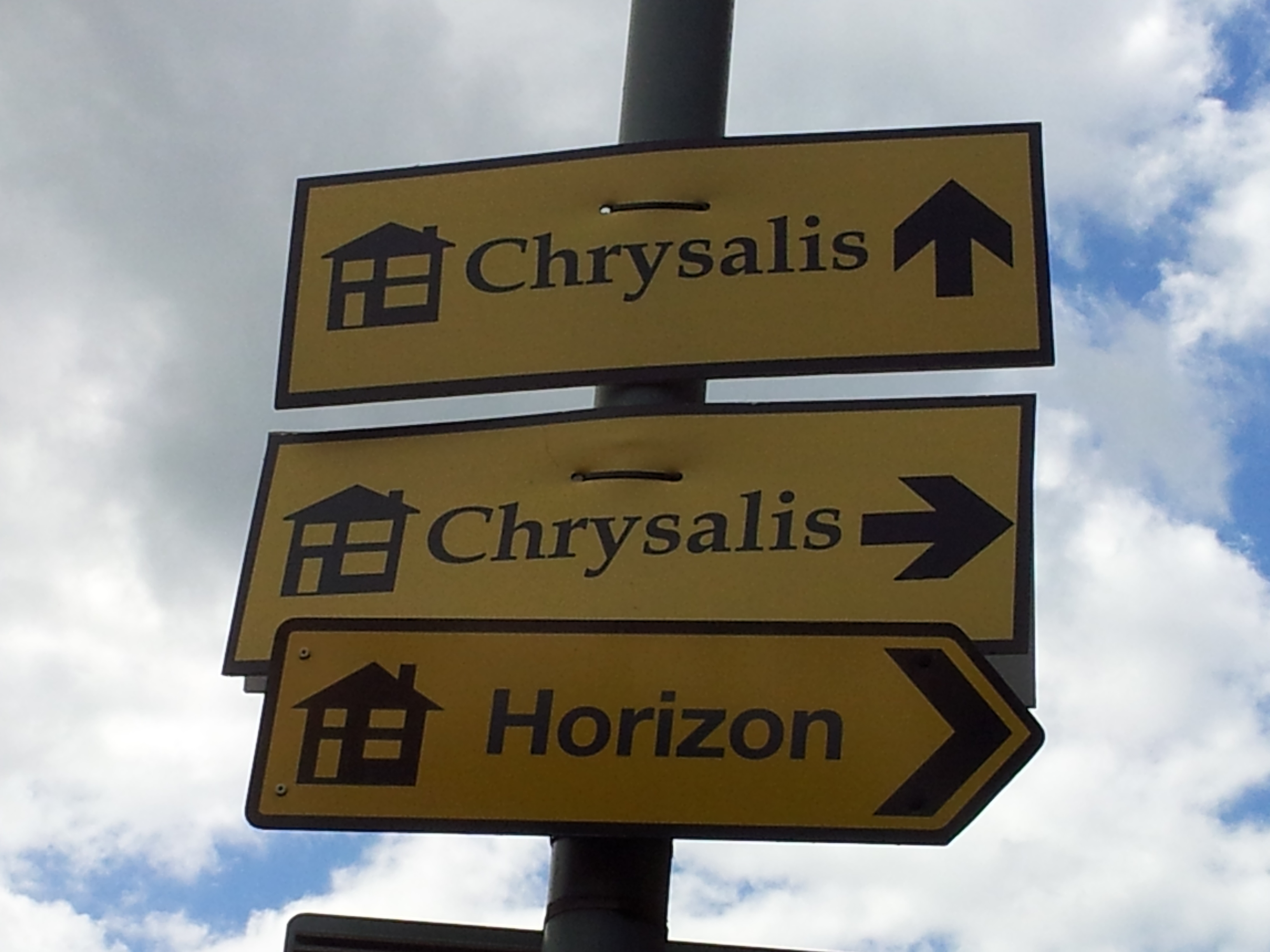
Found City Poems

Uncategorized

chrysalis chrysalis horizon 070714-1

http://foundcitypoems.tumblr.com/

A new tiny poetry web journal. Read, share, enjoy, submit.

Manifesto

1. Found City Poems is an idea freely taken and freely given. We want you to join in.

2. We hold that text is the most significant building block of the contemporary city.

3. We are in love with text, and especially in love with text in the urban environment. We are endlessly fascinated by how text is used in cities, and by what is hidden therein.

4. Although we call them “Found City Poems”, we like poems found in any environment, urban or rural or somewhere in between. We think that wherever text appears in the environment, there is a tiny fragment of city there.

5. A Found City Poem is not received, but revealed. A Found City Poem is never a given message from an advertiser, urban signage designer, punk flyposterer, or other text author. Each Poem must be Found through unexpected juxtaposition, framing, angling, or other device. We mistrust authors of text and what they have to say, but are grateful for the raw materials they provide.

6. A Found City Poem will have meanings unintended by the authors of its source texts, and may be outright contradictory. Political, ideological and aesthetic commentary on the source texts is welcome, but we hope that Found City Poems will live longer than their sources.

7. A Found City Poem must not be digitally edited to find the poem: it must record the poem as it is found. Digital editing is permissable to alter contrast and brightness and so on in order to make the poem more legible, as long as the process does not obscure any text that would otherwise be visible.

8. We find Poems as children find them: we are ontologically and aesthetically naive. That is to say, we do not overly question how reality is made up or what we find beautiful.

9. The artwork is the Poem, not the photograph. Therefore, crappy photos are perfectly acceptable. They may even be preferable. Cameraphones are encouraged. We do not care if the photo is poorly lit, slightly blurry, or from a clichéd angle, so long as the Poem is clear. Professional photographers are still welcome as long as they are trying to find Poems, not photographs.

10. We believe that looking for Poems is a wonderful way of exploring a city, whether it is familiar or unfamiliar. Looking for Poems heightens and directs observation, and can be very calming in the crowds and noise of the contemporary city. Looking for Poems is especially good at neutralising the overwhelming effect of a city filled with advertising copy.

11. Looking for Poems is about finding out how text is used in the city, and then trying to get it to do something else.

http://foundcitypoems.tumblr.com/

Days 10-12: The Southwest Ontario Slam Circuit

Uncategorized

I roll out of the GO train, the commuter transit system for Greater Toronto and Hamilton, and have no idea where I am. I’m in a vast parking lot and it looks nothing like on Google Maps. I’ve got some walking directions and ask someone about to get on a bus to be pointed in the right direction; as it happens, she sends me the wrong way down a highway. Fifteen minutes later, a suited car salesman (quick to tell me of his Scottish ancestry) sends me back the right way. Then I have to find my way across one of the biggest intersections I’ve ever seen, which takes at least 20 minutes to get over, and finally I’m at the Black Bull: a side-of-the-motorway bar with a couple of big function rooms. There’s going to be a slam here later.

*

I’m an hour or so early, and as the poets trickle in the bar’s restaurant slowly transforms into a slam venue. The tables are spun round, rows of chairs set up, the stage lit. Slam takes over spaces like that. We can do it anywhere and we know what it takes to get audiences to enjoy poetry.

*

Tomy Bewick, who set up the slam six years ago, rhapsodises to me about the Canadian Festival of Spoken Word. It’s a week-long celebration and meeting place for the spoken word community, built around the national slam championships. He shows me a bilingual best-of book from last year’s slam: it’s amazing, filled with Canada’s slam greats. In the UK we’re used to individual slam being the main thing, but here (as in the US) it’s team slam that rules: each regular slam night sends a team of five poets, who prepare a repertoire of solos and team pieces together, ready to deployed in a series of intense (and intesnely tactical) bouts. All these regular slams (including the three I’m going to) are selectors for the nationals, with cumulative scores and final events determining who gets on the team. Tonight Burlington has a slot open, so there are poets here from other cities too, hoping to win the chance to be part of it. That’s normal: these slams are intensely interlinked, with teams trading members year-on-year and regularly competing in each other’s slams. I’m going to see some of the same faces each night for the next couple of days, as well as new folk every time. The stakes are high, but also approached joyfully; I’m glad I don’t have that extra stress, but delighted to ride the energy.

*

Each slam has its own call-and-response chant. Tonight, Dan Murray has us shout “Bring Shit?” “PROPER!” for each poet. In London, they raise their hands and call “Show the Lo-o-ove!” for every performer, and in Guelph it’s “GPS?” “Where you at!” And after every poem, after the scores have been cheered and booed, it’s always “Applaud the poet, not the points!” This is ritual and theatre and community: most folk here know how it goes down, and newcomers are swept up in the energy of it anyway. Whereas in Scotland I’m used to open mics being the place where new poets are supported and slams being mostly for more experienced performers, here the dominance of slam means that it’s where new poets cut their teeth: finding these celebratory ways of supporting every poet (and getting them through the nail-biting scoring process) is a huge part of what the night is about.

*

Each of the three slams I go to has its own character. Burlington has a small but awesome audience of 40 or so: mostly poets in their 20s and 30s with some older faces. The slam has been a big part of building an arts scene for the city, and the organisers are now just beginning to set up schools workshops. The London Poetry Slam is in the London Music Cub, a well-known venue in a mock-Georgian mansion; they pack it out with around 150 souls, including loads of high-schoolers, testament to the work they’re doing in spoken word education. (I’m one of the older poets in the slam, which has many excited young voices: whereas 27 is still very young in page poetry terms, in slam I’m fast approaching middle age.) Guelph Spoken Word, meanwhile, is in a very trendy bar above a bookshop, and being a University town has a big student audience — but also one of the most diverse, demographically. Even though each night runs on the same format and rules (unlike the very diverse range of approaches in Scotland), each feels very fresh. I’m sad not to make it to the other events in the circuit: St Catharines, ARTiculated Noise and YorkSlam.

*

Having a slam circuit is really important for these events: it’s enabled them to put in joint bids for funding, and to secure bigger feature acts through offering multiple tour stops. For Burlington and London, it’s Sean O’Gorman, an Ottowa poet who’s visiting after a year of teaching in career, and wow, audiences and organisers are glad to see him back. In Guelph, Komi Olaf drops all our jaws by doing live painting as he performs his extraordinary poems.

*

And the slam poems? What are they like? As at the Nuyorican, I’m taken aback by how personal everything is, but it seems even more intense at these events, with many more younger poets and first-timers trying out raw material. The vast majority of the poems are in the first person, many of them combining stories of suffering, abuse and oppression with intense political commitment. Without wanting to get too much into stereotypes of British and North American character, it’s definitely unlike most slam poetry in the UK, where I think we’re less likely to put our own stories into our politics, less likely to open up our wounds so visibly on stage, more likely to deploy artistic artifice to get our points across than straight talking. It’s not better or worse either way — just different, with different opportunities and different risks. Sure, to me there’s something scary about opening up so much on stage, and I’m worried about what it means to perform pain for points, but at the same time it’s so clear that slam here is also about political community and personal recover. And sure, sometimes artistic artifice feels like hiding, and the voices in UK slam often ring false to me, but at the same time I’m delighted by the range of styles you can find at UK slam and how unpredictable the results can be. We’ve got a lot to learn from each other. I hadn’t expected it all to be so different, truly.

*

At the Guelph Slam, Holly Painter – who’s also the organiser of the London Slam – performs a team piece with TedO called “PSA”. It’s a tribute to the power of slam, especially for youth: its lines head of the criticisms of slam poetry with ringing endorsements of slam as a route to empowerment, as a way youth write to right wrongs and fight for their rights (I paraphrase). I’m gutted I can’t find a video of it online to show you, but her Find Your Voice comes close. Check it out.

*

Riding back to Toronto from Burlington at midnight with Ritallin, who won the night and the spot on the team, we swap slam stories and promise to support each others’ future tours. We’re keen on trading between poetic cultures. He’s a veteran of the Canadian scene, and set up many long-running nights, now co-ordinated through his Cytopoetics project. “The sign of the success of a night,” he says, “Is when it can carry on without you. The nights I’m proudest of are those that have run for like six or seven years after I’ve passed them on to a new collective. That’s what it’s really about. It’s about the community, about making spoken word happen for everyone.”