The First Year Living as an Artist

Uncategorized

Has it gone well?

I ran into my old boss yesterday, from when I was doing environmental management work in the arts, outside the supermarket, loading two overfull pannier bags onto my bike. I left my half-week job voluntarily a little over a year ago to pursue being an artist full-time; she’s also now left to take a personal sabbatical and figure out what the next thing is. “So, how’s it gone?” she asked. And I rattled off a big list of things that I’ve done this year, and as I was doing it, I thought, wow, yes, this year has actually gone pretty well.

I saved up a financial buffer before I left my job so as to cushion the risk of writing and performing full-time, and in year one I’ve managed not to go into it: the first year’s paid for itself. I’m a bit awed. And as part of all that, I’ve published a full book, done a Fringe show, released a game, and plenty more besides. I’m really proud of this year.

The thing is, while it’s happening, it’s barely ever felt that way. Before every performance goes up or project launches, I’m fully convinced it’s going to flop; whenever I submit an application for funding or a commission, I believe I’ll miss out (like all of us, I mostly do); I am  constantly worried about money and where the next contract will come from; after each piece of work concludes, I’m happy about it for a couple of days and then start worrying that I didn’t do it well enough and that I need to do more. I seem to always want to be doing more, and better.

That drive’s a curse! Sometimes the drive for more is what keeps me making work, but it’s a toxic drive, one that eats away at your real reasons for making art: I’d rather be in that place where I’m making art because it makes me, in that moment, happy. But that’s not the world I get to live in yet, or maybe ever. So I’ve made a bargain with my anxious productivity, letting it rule me sometimes so I can find some happiness in other moments, and sometimes in the art. It’s been a good year, and I’m proud, but it never stops being hard.

What I did

  • I launched a crowd patronage scheme for my work. It’s built up to 40-odd folk adding up to £100 a month, which makes a dent in my rent and is an extraordinary vote of confidence: I always know there’s that audience wishing me well.
  • I finished the writing of Everything I Bought and How It Made Me Feel, performed the full theatre show a couple of times, and booked a small tour for 2016. I learned a lot about what theatre touring involves and what my limits are.
  • I released a prototype of Precariat!, my first pen-and-paper roleplaying game, with Adam Dixon, and started playtesting for a full version.
  • I published the verse sequence Drone in the book Our Real Red Selves, from Vagabond Voices, and launched it around Scotland.
  • I spent 4 months in Orkney to research Orkney language, start writing the next book, and support local language writing. We ran a sell-out performance event, Rashy Bulder’s Big Night Oot, which led to Abersee Press publishing an anthology, Orkney Stoor.
  • I spent a week in Glen Nevis writing games for hikers, which were later exhibited at Somerset House.
  • I performed Drone in the Edinburgh Fringe as part of Shift/. We sold well, got great press, and broke even or a bit better (depending on how you factor in rent), which at the Fringe is a huge achievement.
  • I created a funding ritual for Artsadmin, and performed it for the first time at Toynbee Hall. It brought a lot of people pleasure, online and off, and that made me happy.
  • I published my first full-length book, Tonguit, with Freight. That was only in November, so it’s too early to know how well it’s landed, but the first review made me cry with appreciation.
  • I launched the full-length edition of my game Raik. It got featured on two big indie games sites and has had 500+ downloads so far, which is better than I’d ever hoped for.
  • I did lots of smaller things too. I wrote some games for the Wellcome Collection, kept publishing creative essays on arts and politics on my blog and occasionally in national periodicals, created some Twitterbots, made a hypertext about the West Highland Way, I started working for local libraries on artistic projects for reader development, I tweeted a lot, performed at poetry events and theatre festivals, and kept trying to figure it out as I go along.

What’s going to happen

  • I’m touring Everything I Bought in February and March. It’s six dates, and I’ve produced the whole tour myself, which I’ve learned is a thing I will not do again. I’m very pleased with the show and want more people to see it: I think it’s the most accessible and populist performance I’ve made, and that makes me want to tour it. But I need to work with a producer in future!
  • I’m working with Neil to develop Drone to a finished show and with Adam to develop Precariat! to a finished game. I want to get these projects somewhere good and done before I do another big thing.
  • I’ll continue writing the Orkney book, but slowly and carefully: it’ll take a couple of years at least, and I need to find a way to fund further development.
  • I’m co-directing a performance art cabaret, Anatomy. We received funding for 2016 which is enabling us to professionalise it and produce more and better art.
  • That secret project that I’m not telling anyone about yet.
  • I will continue to do small new things when they grab me. I want there to be time for new ideas. I have thoughts for games, I want to learn how to do longer form generative text, I want to write poems outside of my Orkney project, I want to do some silly one-off performances that have been brewing for a while, I want to apply for attractive commissions. But I’m starting to accept that I can’t do it all, and that I should have a long enough life to do plenty.

How I want to be

I’m tired of always being tired, worried about always being worried, and want to work on not working too hard. The joke is the paradox: the work of making your self is also tiring, worrying  work. It would be nice to relax into who you are, but I’m not sure if I get to do that. I do have some ideas though.

If I’m making New Year’s Resolutions, then they are “Say no to more things” and “Take at least two full days off every week”.  Those add up to the mega-resolution: “Do a bit less work”.

Another way of doing that is focussing on what I’m good at doing and finding ways not to do what I hate doing. I’m bad at selling my own work: I can keep up the sales pitch for a week, and then get miserable about it and don’t capitalise on all the labour it took to make the work. This means that I create too many new things all the time, which can be a lot of fun, but isn’t sustainable. I’m also bad at asking venues to programme my performance: it takes me sweaty hours to write pitch emails, and consumes all my energy to deal with the nudges and lack of replies and tour organisation and ugh. It’s weird, because I’m good at producing other people’s work, but I need to stop producing my own: I need to pay someone else to do that. I want to focus on writing and performing, because that’s what I’m best at and what makes me happy, and I want to find ways of paying someone who is made happy by producing my work.

And another way of doing that is understanding how the money fits together better. I’m only a year into being an artist, and the money has worked out, but I don’t know if it will keep working out. I know there is no direct correlation between the effort I put into an artwork and the cash I get out of it. I know that my income is hung on getting two or three big commissions in a year, and that all the hundred quid gigs are just a top-up, and that scares me, because what happens when I only get one — or zero — big commissions in a year? I spent years tracking how my artistic income matched up to my non-artistic income, so that I could take the plunge when it looked like I could live off just doing the art; now I need to figure out how the different strands of art work combine into something liveable. I don’t even know if I can afford to live year on year, let alone have anything like secure accommodation and a pension. My hope is that by paying more attention to how the cash adds up I’ll be able to spend more time doing the things that make me happy and less time doing the things that make me tired.

But these are plans and hopes and those are flimsy things. I used to write a “life plan” at the beginning of each year: I’d set out some goals and think about what it would take to achieve them. I called each “What am I doing with my life?” I would write each out in full and then not look at it til the next year. They’re funny to read now: it’s been years since I did one. Each time, half of it happened and half of it didn’t; my goals five years ago line up very differently to my goals now. I’m not who I thought I’d be, but things are going better than I’d ever planned. I know there are going to be failures, and things that go wrong, and plans that go weird. I know that this is a hostile world to someone who wants to do art in a way that makes the world a bit better, and that that can be exhausting too. I don’t want to work so hard at not working so hard that I’m more tired than when I began. It’s been a very good year, and it’s been hard, and it’ll keep being so, but I’m wishing another good year for myself and a good year for you.
Everything I Bought: Spring Tour

Uncategorized

eib

The Show

Harry’s got a problem. Maybe you do too. He keeps buying things to feel better, but they just make him more miserable. So he started keeping a diary…

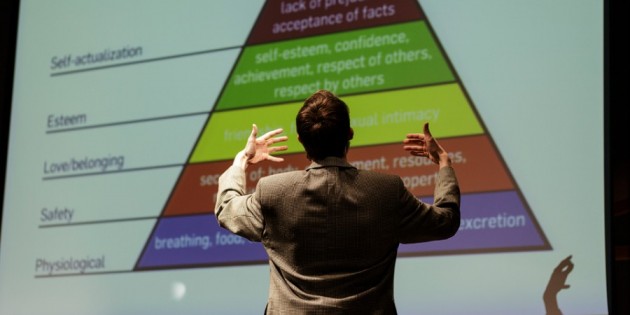
For a full year, Harry logged every transaction he made at everythingibought.tumblr.com. In painstaking detail, he wrote about how each purchase made him feel – his hopes, dreams, fears, and utter failure to come to a liveable compromise with consumerism. Now he’s sharing what he’s learned in a performance lecture that dissects shopping until it all falls apart. Framed as a presentation of pie charts and bell curves and statistics about consumption, it’s really about being miserable, being afraid, and trying to find a way out.

Everything I Bought And How It Made Me Feel is now a new stage show, asking: Why do we buy what we do? Is there any way to do it better? And how does consumerism really make us feel?

The Dates

Leeds
Sunday 7th February, 5pmThe Hub, 67-71 Bath Road, Holbeck, LS11 9UA
Pay-What-You-Decide (reserve tickets)

Huddersfield
Monday 8th February, 7.45pm
Lawrence Batley Theatre, Queen’s Square, Queen Street, Huddersfield, HD1 2SPPay-What-You-Decide (venue info)

Edinburgh
Thursday 18th February, 6.15pm
Lecture Theatre 1, Appleton Tower, 11 Crichton St, Edinburgh, EH8 9LE
Pay-What-You-Decide (venue info)

Glasgow
Sunday 21st February, 7.30pm
Glad Café, 1006a Pollokshaws Road, Shawlands, Glasgow, G41 2HG
£6 (venue info)

Newcastle
Tuesday 1st and Wednesday 2nd March, 7.45pm
Northern Stage, Barras Bridge, Newcastle, NE1 7RH
£10 / £8 (buy tickets)

Reviews

“As the administrative litter of capitalism accumulates around him on the stage – receipts upon receipts upon receipts – Giles gives voice to the inner dialogue that underscores so much of our buying activity. That woozy cocktail of guilt, denial, principle and compromise, all delivered with jittering, ever-mounting anxiety, is so familiar at times that it hurts. I think of all the times I’ve shopped at the supermarket chain I hate and all the takeaway coffees I’ve convinced myself I need despite the waste. Giles also sharply captures the dilemma of ethical consuming: it seems necessary, in a harmful system, to make the least harmful choices, but expressing your politics through consumption feels like both a contradiction and a cop-out. In the end, of course, every decision is a sort of defeat. But Giles also recognises the intense emotional attachments we can form for the things we choose to spend our money on.”
Catherine Love
“Harry Giles’s performance maps out psycho-geography of its own – his long cycle ride to the ethical food shop, versus the short trip out to ScotMid to buy ready made pizzas. […] Performance can be a way of chipping away at their stain-resistance surfaces. Giles is bearing witness to the discomfort that comes with a constant pressure to make the right financial choices in a world that gives you too many wrong options.”
Alice Saville, Exeunt

What is Madness?

Uncategorized

bangour

Madness is Terrorism

I am dangerous. My brain is twisted in a way that makes me a danger to myself and others. The horror – you’d have to be mad to do something like that – becomes the fear – if you’re mad, you’ll do something like that. Violence and madness are defined in each other: if I’m mad, I’m going to be violent; any violence that isn’t allowed is madness. And any violence that is socially permitted isn’t violence, but for my own good. I’m a terrible risk, and so I need to be cut out of society. I am a terrorist.

Madness is Neurosis

I am messed up. Through some trauma, some event or series of problems, I can’t react to the world in a whole and healthy way: I act out, I have defence mechanisms that hurt me and people around me. I have unhealthy desires that get in the way of my wellbeing. I need to be helped. If I talk it through enough in the approved way, I’ll identify my trauma, come to terms with it, and find better ways to be in the world. I am a neurotic.

Madness is Laziness

I am a scrounger. I can’t be bothered to earn a wage like the rest of us, so I’m scamming other people. I’m manipulative, looking for any way to get cash that doesn’t involve lifting a finger. I rip off the state and I leech off my friends and family. Don’t help me: you’re enabling me to indulge myself and I’ll never get better that way. I need to pull myself together. I need some tough love: if you take the support I don’t deserve away from me I’ll learn to stand on my own two feet. I am lazy.

Madness is Invasion

I’m not myself. Something has got into me, something has changed me. Maybe it’s demonic possession; maybe it’s a terrible illness; maybe it’s a manipulative friend. Something from outside of me is hurting me. It’s not my fault. We need to find out what it is and get rid of it: exorcise the demon, cut out the tumour, leave the abuser. I am invaded.

Madness is Insight

I am special. I am a shaman, a magician, an artist, a traveller. My unique brain gives me a powerful perspective on the world that you can all learn from. Sometimes it’s scary for you and sometimes it’s painful for me, but we need to honour my fire. If I embrace my gift, I will learn how to manage it; if you respect my energy, you will learn how to love it. I have so much to offer. I am insightful.

Madness is Generational Malaise

I am a Millennial. My whole generation is pathetic. We have been taught to have far too high expectations by our coddling parents; we all think we’re special and can’t stand anything difficult, any struggle. Or else our brains have been reshaped by constant connectivity, by staring at screens too much and too long, by always being worried about what our friends are thinking, by always projecting the perfect image of ourselves, so that we can’t can’t settle, can’t accept ourselves. I need to switch off. Grow a pair. Calm down. Get real. Get married. Get a job. Grow up. I am my generation.

Madness is Difference

I’m not like you. Something about my brain, my body, my mind, diverges from the norm and makes me a minority in society. People don’t understand me, and society is set up to disadvantage, disregard and disempower me. Anyone who’s not normal gets punished, and that’s why I hurt. You need to accept me; you need to make space for me; you need to understand how I am and support me in building a society that looks after everyone, no matter how strange they are. We should destroy the whole idea of normal. I am different.

Madness is Disorder

I’m not working properly. My mind is out of whack with how we all think it should be, and that’s hurting us. Perhaps it’s a twist in my synapses; perhaps I’m missing a part of my brain; perhaps I’ve learned the wrong lessons from life; perhaps the drugs have messed with me too much. I need experts to work out exactly what’s wrong with me through the correct identification of symptoms in a rigorously organised system which will also outline the advised courses of treatment. There is hope, but I might be incurable. I do not fit the order, and I should. I am disordered.

Madness is Chemistry

I have a brain that’s gone wrong somehow. My neurotransmitters are misfiring, or something like that. I need to experiment with different treatments to get the chemicals in my brain back to levels that won’t hurt me, that will stop me behaving so strangely, so badly. I should try drugs, I should try yoga, I should try eating better, I should try CBT, I should try turning off all electronics before I try to go to sleep, I should get more exercise, I should try different drugs. I am my chemistry.

Madness is Capitalist Kyriarchal Oppression

I have been broken by the system. Our economy uses up workers until they can’t work any more: I’m all used up. I am constantly being sold new desires, constantly being told to buy a better way to be, so no wonder I’m unsatisfied. I am at the bottom of the heap, so no wonder I’m sad. I have to keep finding new people to exploit me in case I fall into poverty and disaster, and I’m shackled by a system designed to keep me in want, so no wonder I’m scared. Our society forces people into boxes so as to better exploit them, so no wonder I’m trying to break out. My society is trying to kill me, so no wonder I’m fighting back. I am fighting back.

Madness is Ambiguity

I am a mess. I have ideas of madness that work together and contradict each other. They overlap; they muddle together to create new ideas of what madness is. They argue against each other. They all live in society, and they all live in me. Some of them make me hurt more, and some of them help me find ways to hurt less. Sometimes an idea of madness that helped me hurt less turns round and bites me; sometimes an idea of madness that I’ve railed against turns out to have something useful in it. In order to survive being mad, I need to be able to shift between these ideas of madness.

What does it mean, to madden a thought? To make a theory mad? Madness is both irrationality and the excess of rationality, which, in my society, brewing up a muddle of bias, logic and pragmatism to call just common sense, is the same thing. To be mad is to think too hard, to not think enough. To be mad is to be unable to live with just one idea of how you are, how you should be: there is no idea of madness which is wholly liveable. I drift back and forth between these worlds; in the acceptance of that oscillation, I’ve found, is something like coping. To be mad – or to be mad well – is – I think, I guess, I suggest – to embrace that madness and madness and madness are irreconcilable. I am ambiguous. I am mad.

* * *

These ideas and their theoretical basis owe much to the work of Darcy Leigh, and to dozens of mad conversations about how best to be alive.

For further reading on radical and mad-centred approaches to mental health, all of which have shaped my understanding somehow, see: