25 Ways for Artists to Think About Economics

Poetry, Politics, Rambles, Theatre

I wrote this brain-dump for Andy Field, who was asked to prepare a presentation on “how artists can think about new financial models for themselves and for audiences”. He collected 150 bits of advice, sold them for £1 each, and used the proceeds to pay a violinist to play music for the length of the presentation: hurrah for the meeting of form and content! I keep attempting to write something long and thoughtful on art and money and how it all fits together, or maybe organise a conference about it, or a piece of action-research, or… well, none of that has happened yet. Maybe it will. In the mean time, two very nice people recently reminded me that I’d written this, so I reread it, and it turns out I’d already said most of the things I’ve been thinking about. So here it is. it’s a start, anyway.

“New financial model” does not mean “working for free”. If someone asks you to work for free and gives you nothing in return and pretends it’s a new financial model, tell them to fuck off.

Next time a venue says it will pay you in experience and exposure, ask them if you can buy tickets to their shows with that.

Go read about the Industrial Workers of the World. Start a union.

Read everything that Radical Routes have on the subject of co-ops. Start a co-op.

Go to an organisation in the UK Social Centre Network and ask them how they organise and fund themselves. Work out how this can be apply to an arts organisation. (Many of them are already arts organisations.)

If you’re doing self-promotion well, you’ll probably feel like an arsehole. Ask other people if you are being an arsehole. If they say you aren’t, you’re doing OK.

Raffles are FANTASTIC. Ask someone who grew up in a rural area how to do them well. This is technically an old financial model. Sorry.

If you are working for free for an organisation or event and other people in the organisation or event are getting paid, something may be fucked up. Exploiting labour is one of the oldest financial models there is.

Take assertiveness, confidence, public speaking, or call centre training, and apply everything you’ve learned to negotiations with venues and producers. Don’t worry about your embarrassment, shyness, awkwardness or shame. It is OK to feel these things, but don’t let them stop you. Asking to get paid is part of building a new financial model for the whole arts sector.

Whenever you work with another organisation, ask them if you can have a look at their budget for the project. While reading it, ask yourself if you would spend the money differently. When you’re in their shoes, make sure you do.

Every new financial model has to interact with a lot of really crappy old financial models. A new financial model is not a new world: it is a laboratory in an old world. It is OK if something goes wrong. It is OK if something explodes. This is how we learn.

Start a reading group for Marx’s Capital. Start a reading group for Smith’s Wealth of Nations. Start a reading group for Kropotkin’s Mutual Aid. Have a party.

If you pay less for a Pay-What-You-Can show than for a set price show, why are you paying that much for the set price show?

Experiment with shoplifting. You will learn a lot about how property works.

Next time you throw a house party, ask the guests to pay. Prepare your arguments.

View the writing of economic impact reports as a radical act. Make it so.

Why do you need to make money from your art? Seriously. Make a list of the answers. Think of ways you could meet all those needs without money. Make it so.

Is your labour the same sort of labour as the labour of someone who works in a call centre? Write a list of the reasons it is. Write a list of the reasons it isn’t. Now make it better for both of you. You might already be the same person.

Poetry publishing is subsidised by pay-to-enter poetry competitions. What the fuck is that all about?

There is very little stigma attached to a musician self-publishing their first EP. There is massive stigma attached to a poet self-publishing their first pamphlet. Discuss.

Financial models are the same thing as power models. How money is distributed is determined by how decisions get made. You can’t have a new financial model without also inventing a new decision-making process.

When you pay for art, what are you paying for? (a) The experience; (b) The object; (c) To support the artist; (d) To support the producer; (e) Because you have to; (f) Because you never thought not to; (g) Other (please state).

Here are some things an artist might be: (a) Labourer; (b) Entrepeneur; (c) Community bard; (d) Amateur or hobbyist; (e) Commodity; (f) Self-facilitating media node (arsehole); (g) Social Worker; (h) Scrounger. Which of these do you want to be? Make it so.

If you give money to buskers, do you actually stop to listen?

When somebody brings a bottle of wine to your dinner party, do you feel obligated to pay them, or to bring a bottle of wine when you go round to their house? What does this mean for the way we do art?
This is not a riot: 101 uses for a halfbrick

Theatre

In 2011 and 2012 my main theatre project was This is not a riot. It was about riots, of course — half a performance lecture and half a training workshop, finding ways to train audiences to understand and cope with riot situations. It was first conceived in April 2011 (a scratch at Artists’ Voice, Leicester), and was booked for The Yard, Hackney in October that year. In one of those strange and terrible serendipities that happens when you make theatre about contemporary subjects, two weeks after that booking was confirmed, Hackney was burning. The finished show toured Scotland in March 2012, and went off to the CrisisArt Festival in Italy in Jun 2012.

Over the course of two years the show changed a great deal, but one element stayed in every performance: at the end of the show, to release some collective tension with laughter and imagination, I gave the audience 5 minutes to come up with as many possible uses for a halfbrick as possible. I put “Throw it through a window” on the screen, and claimed I’d got a bad case of functional-fixedness that I needed their help to solve. I was hoping that over the course of the shows the audiences would collectively come up with 101 different uses.

Then other opportunities and other shows happened, and I forgot to ever amalgamate all those lists of uses. I was trying to put my archive of show documentation in order this afternoon, and realised that that wee job needed doing. To my delight, once I’d taken out all the definite duplicates across audiences, the total uses came to precisely 101! (I only wangled it a tiny bit.) So I present to you 101 Uses for a Halfbrick, authored collectively by audiences in Leicester, Hackney, Glasgow, Dundee, St Andrews, Edinburgh and Arrezzo. Enjoy! And feel free to add your own.

A video and blogs about the show can be found here, and a photo slideshow’s below.

101 Uses for a Half-Brick

1. Throw it through a window
2. Cupholder
3. Ashtray
4. Desk tidy
5. Draw a circle
6. Doorstop
7. Rustic paperweight
8. Coaster
9. Bookend
10. 1/1000th of a house for an intelligent pig
11. Hammer
12. Chair
13. Pestle
14. Let it be
15. Make oil paint
16. Theatre prop
17. Iron clothes
18. Practice your balance
19. Weight training
20. Back-scratcher
21. Level an unbalanced table
22. Nutcracker
23. Bedwarmer
24. Reminder
25. Knuckleduster
26. Mask
27. Line the edge of a garden
28. Begin a stone massage
29. Threaten siblings
30. Toy for hamsters
31. Crap present
32. Pet
33. Hide your keys
34. Step up to things
35. Plumb line
36. Painful hair tie
37. Kill bugs
38. Neck pillow
39. Alexander technique training
40. Water-saving device for cisterns
41. Juggle with it
42. Found art
43. Hammer tent pegs
44. Build a barricade
45. Fix a wall
46. Crap ruler
47. Crush grapes, make gritty wine
48. A seat for teddy bears
49. Picture frame
50. Crush it to make sand
51. Talisman
52. Metaphor
53. Hat
54. Grow moss
55. Make a tiny kiln
56. Play music on it
57. Finishing touch for a rockery
58. House a spider
59. Sex toy
60. Jewellery
61. File your teeth
62. Sharpen knives
63. Send it into space to confuse aliens
64. Bury it as a perplexing time capsule
65. Tripping tool for slapstick comedy
66. Knock yourself out
67. Throw it at a cop
68. Coaster
69. Get another one and make a shelf
70. Scratch a slogan
71. Scratchpost for cats
72. Tent peg
73. Logo for a failing building society
74. Decoration for a fish tank
75. Paint it
76. Declare it as an independent socialist republic
77. Stand it as an election candidate
78. Practise karate
79. Pretend to practise karate to increase your social standing
80. Contribution to rock-breaking prison punishments
81. Compulsory suppository for Lords
82. Grappling hook
83. Cardio step exercise
84. Shelter from the rain
85. Toilet paper for elephants
86. Make two quarter bricks
87. Ballast
88. Hold down accelerator in a thrilling action movie
89. Peep hole
90. Glory hole
91. Amateur dentistry
92. Start a brick collection
93. Shoe rack
94. Play catch
95. Barter with it
96. Secretly increase the cost of nasty people’s flight baggage
97. Eat it for a dare
98. Start a riot
99. Sell it as a fake drug
100. Snort it
101.  Break into a greenhouse

What We Owe: Debt, Commerce and Art

Theatre

What We Owe is a totally unqualified debt counselling service. Running usually as a one-on-one performance, but with variations for pairs ans groups, it leads each participant through a discussion of what they owe – not just financially, but also emotionally, socially, ecologically, and so on. Together we create an absurd (but often effective) Personal Debt Audit, covering everything from the meals they ought to cook their parents to the trees they need to plant, along with a personalised Debt Action Plan. It’s been in development in various forms since August 2010; the first full run of the finished-ish piece was at Arches LIVE in September 2012. You can watch a video of the piece in action here, along with a semi-satirical Strategic Impact Report; this blog is by way of a less formal and more reflective follow-up to that first report, looking at a second run in March 2013.

Harry Giles – What We Owe – Rogue’s Galleries, Chester Performs from Harry Giles on Vimeo.

What We Owe was part of Rogues’ Galleries, from Chester Performs — a 11-day festival in which a series of empty shops were taken over by installations, performances and workshops, all looking at art and commerce and the relationship between the two. What We Owe ran as a drop-in session for one week, seven hours a day, inside one of the main shops; sitting outside my wee counselling cupboard, I asked surprised customers if they needed help with their debts and took it from there. You can read engaged reviews of the project here and here; I hope Confused Guff finds some of the “view of how other people dealt with their debt” here. (For me, the performance always needs to extend beyond the physical time spent with participants; follow-up emails is one common technique I use, and blogs like this another.)

The Rogues performance context gave the piece new material and new dimensions. Working in a city centre event and as a drop-in gave me more diverse participants – across age and class, mostly – than as part of a theatre festival, and beginning with a casual conversation also allowed me to have far more diverse interactions. Not every performance ended up taking the form of the full twenty minute counselling session as I tried to adjust my conversation to the particiant’s needs and interests; interactions ranged from a 2 minute exchange to a 40 minute debate on philosophical first principles, though the 20 minute performance was still at the core of the work. The result was that the piece both expanded and settled down as a performance: there is an established unqualified debt counsellor I can become, who has his own life, interests and concerns. The project now feels less like a performance and more like an ongoing investigation of debt through a genuine and reliable service to the public.

IMG_2518

METRICS
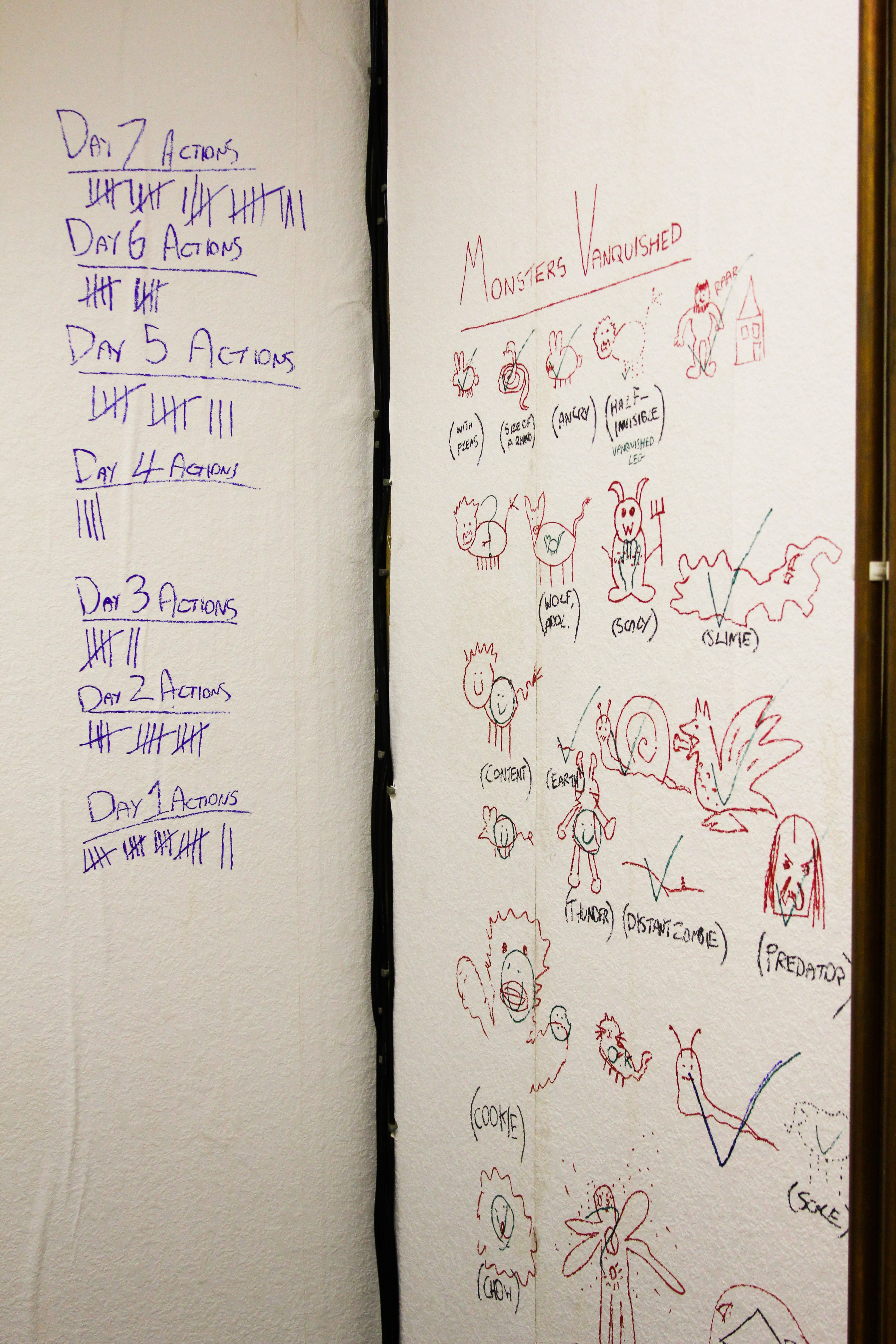
Total actions committed to: 97
Average actions per day: 14
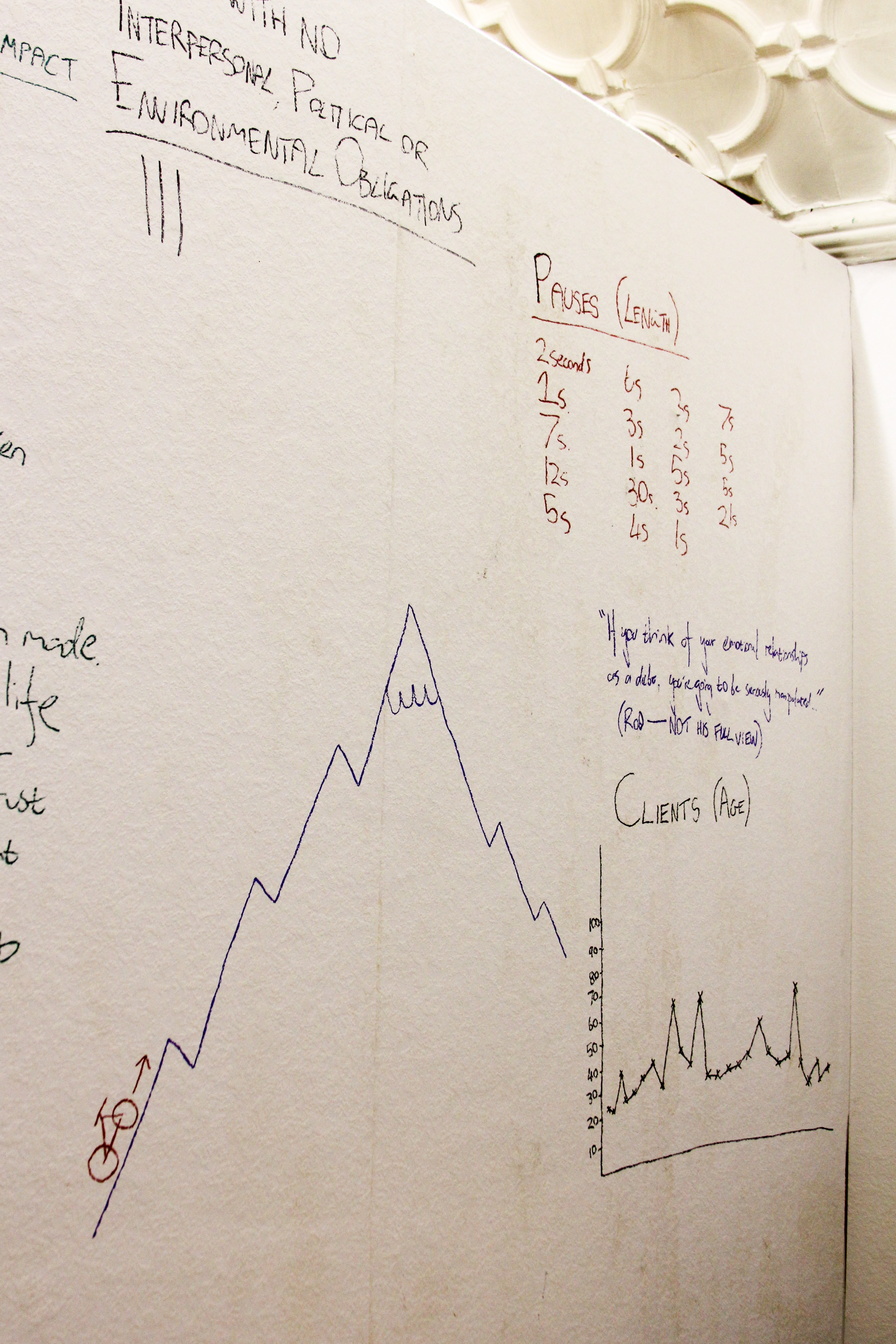
Average laughs per day: 23, varying length and volume
Average pause in response to question: 6.43 seconds
Student loans forgiven: 7
Net economic impact of actions: -£67,000
People declaring no interpersonal, political or environmental obligations: 3

IMG_2509

SOCIAL IMPACT
1 revolutionary mind map made
70 friendly nudges given
2 jobs pursued
2 days out organised
1 book recommended
1 ex-boyfriend rewarded
1 meeting attended
1 newspaper read
1 phone charged
1 present planned
2 free lectures given
1 gift made to self
1 day lived without internet
1 list of dreams written
2 easter eggs sent
1 job avoided
1 box of cards procured
1 bike rehoused
1 tasklist made
1 gesture of divine belief made
1 cold faked
1 domain name purchased
1 truck forgiven
2 holidays booked
2 local charities researched
1 daily rate increased
1 revision session planned
1 radio news listened to
1 book read
1 meditation session practised

ENVIRONMENTAL IMPACT
1 Wikipedia article read
1 recycling bin sourced
50 trees promised
1 conversation with MP arranged
1 garden tended
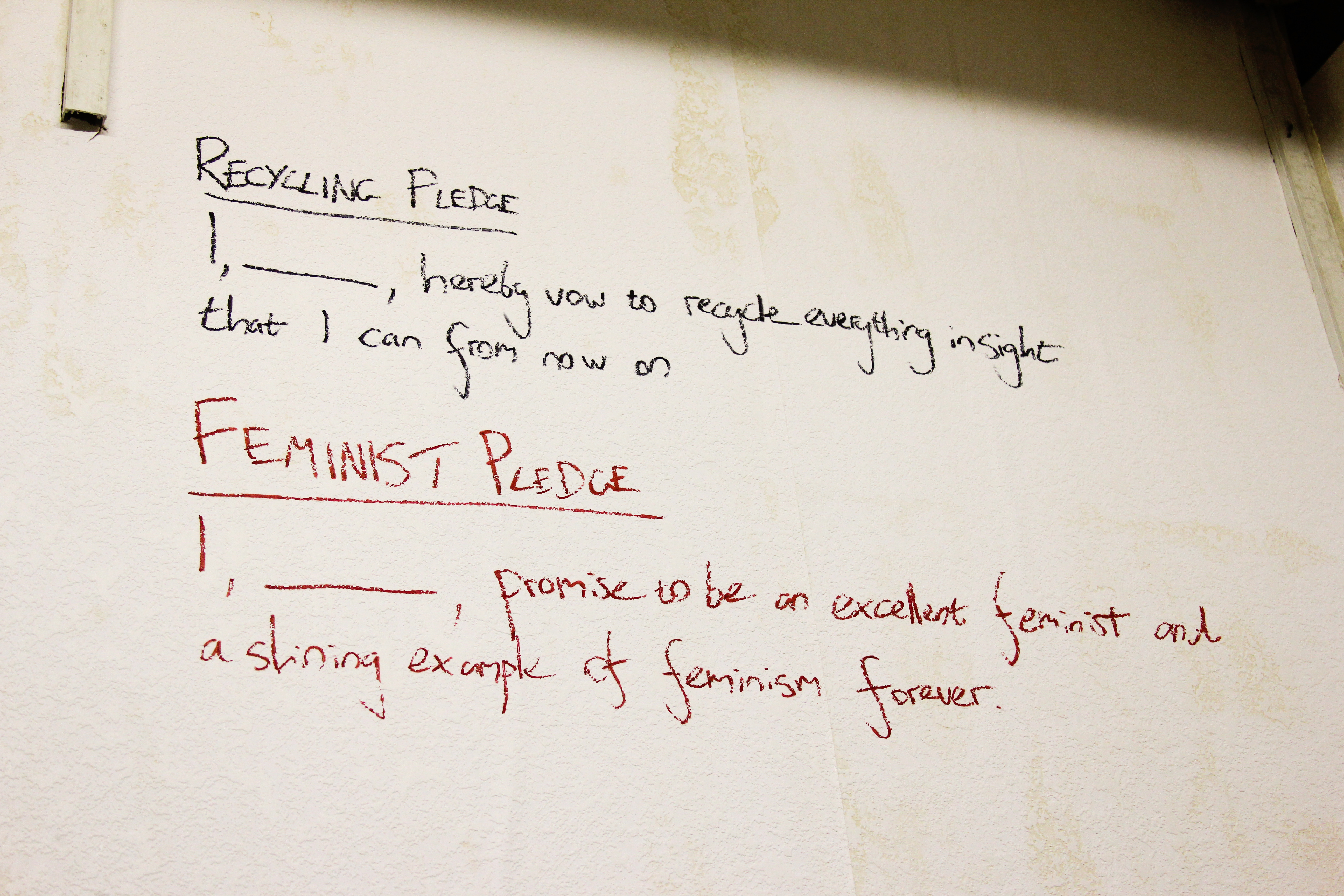
2 promises to recycle better
20 plants memorialised
1 weekly shopping plan made
5 plants returned to life
1 donation to National Trust
1 packet bird feed bought
1 Greenpeace membership completed
1 TV labelled “switch off”

IMG_2511

GIFTS, VISITS, PHONECALLS & MEALS ARRANGED
Mum: 12
Dad: 5
Pal: 8
Sister: 2
Partner: 3
Brother: 1

IMG_2521

PROPOSALS FOR THE COMPLETE ABOLITION OF A DEBT-BASED SOCIETY
– Nationwide system of co-operative credit unions
– Destruction of the party political process
– Network of parenting academies to foster mutual gifting of support
(formulated in conversation by a couple from Chester as their response to my questions)

Chester is a shopping city with a market cross-type city centre, and Rogues’ Galleries was spread across those streets. The festival was thus wisely curated to be an exploration of commerce, the nature of transaction, consumption, and the inadequacies and failures of service provision. So Anoushka Athique exchanged repair work for a story; Two Destination Language offered their lives for sale but made it tricky; Rowan Lear made a performance of her failures as a scrivener; Secret Door Theatre satirised fashion and offered a gleeful riposte.

There’s something anti-capitalist about this, or at least critical of capitalism in the way that art must be (because art is always a playful critique of the structures it finds itself in). And yet the project was still partly allied to a rhetoric of regeneration – it was supported by local and national authorities, and the empty shops gladly given by landlords as a way to generate interest. Rogues’ Galleries thus raised the question of whether art can provide some kind of alter-regeration as a response to city centre decline, not necessarily trying to rebuild business-as-usual, but rather questioning and questing for alternative ways of being in a city centre. Chester is a shopping city; Rogue’s Galleries celebrated that, but in reacting to the centre’s decline also highlighted its own undoing.

All photos by Charlotte Horn for Chester Performs, Rogues’ Galleries 2013; all rights reserved.

IMG_2533