My Stupid Performance March

Events, Poetry, Theatre

classacta1

Being a freelance artist means sending a lot of applications off, and it means rarely being able to say no when they come up trumps. This sometimes leads to trying to do a stupid amount of stuff in a short space of time. I’m about to embark on the busiest month of performance of my life, doing six completely different shows during March, in four different cities, sometimes on the same day. It’d be nice to see you at one of them.

On March 5th I’m over in Glasgow for Arches Scratch with SAFEWORD, a series of theatrical experiments about consent I’m noodling about with. You can read about a previous experiment here; this one will be completely different, but will probably also involve a whip.

Later that week, on March 8th I’m doing a full set at StAnza, Scotland’s international poetry festival. I’m hugely delighted to be there: it’s a wonderful event, and a real honour to be performing there, especially with my frequent co-conspirator Rachel McCrum.

That night, I’m whizzing back to Edinburgh for Anatomy, a quarterly live art music hall event I co-curate at Summerhall. I’ll be hosting, all bleary-eyed and poetical; we’ve got a brilliant line-up of film-makers, dancers, pianists, boylesques, poets and allsorts.

The next week, from March 14th – 20th, I’ll be performing What We Owe at Rogue’s Galleries in Chester. This is lovely festival is taking over a series of empty shops in the town centre; I’ll be offering a version of the debt counselling service last seen at Arches LIVE, which you can see a video of here. As it’s a week-long showing, I’m looking forward to building ongoing documentation of the debts of the people of Chester and how we work out how to pay them back.

Immediately following, on March 21st, I’m bouncing down to London to perform Class Act at the Sprint Festival. I developed the show at the Ovalhouse last year, so it’s lovely to be back in London with it, especially in a festival with such a fantastic line-up, including Chris Goode, Coney, Dirty Market and more. I’m just sad I won’t get to see more of it!

Then for March 25th I’m bouncing back up the East Coast to Edinburgh for Whisper Down the Mountain. This is a tasty performance art exchange project, where artists from New York will be performing new pieces by artists from Edinburgh, and vice versa. I’ll be doing something feminist with duct tape at Inverleith House, while someone in New York is going to be running, to my delight, a version of my Tilting at Windbags Trump-baiting project.

Then I’m nearly done. I get a breather for a few days, and then it’s back to Glasgow on March 29th for the glorious Buzzcut Festival, where I’ll be doing another version of Class Act, alongside enjoying everything else that’s on offer. Like Sprint, it’s a fantastic and varied showcase, with big names alongside wee bletherskites like me.

I am not intending to do much in April. But you never know.

Found at Sea / Collapsing the Barrel

Rambles, Theatre

I went to see Greig and Greig‘s Found at Sea at the Traverse. Written by the poet Andrew and adapted by the playwright/director David, it’s a dramatic poem-cycle about sailing an open boat across Scapa Flow to a wee uninhabited island. “Like a road movie, but on the sea” says David Greig, which is a good description: it’s played as journey-of-self-discovery, with a nice combination of evocative scenery, storytelling, music and personal reflection. It’s also at the moment a work in progress, so not quite in its final form.

I was enjoying myself for the first third. The acting (from Tam Dean Burn and Lewis Howden) was boisterous and fun, the poetic textures were tasty, the music pretty beautiful. I wasn’t enchanted yet – that state you reach when a piece of theatre totally carries you away, wraps you up in its own spells – but I could tell that further down the development road I might well be. I was partly feeling, unfairly, a little alienated by the chumminess of the room: the programme notes described Andrew Greig’s poetry as “much loved”, and that really also applies to the four men involved in the production – these were all faces we recognised and had seen in many different guises. There was a sense of playing to the crowd, which was an oldish and very literary sort of crowd.

There were a few things I was confused about. I’ve usually found Andrew Greig’s poetry to be pleasantly understated and rich in ambiguity, but in this production it was played as high dramatic verse. That may be a characteristic of this particular text – I’d need to read it to be sure – and I did enjoy the rich sounds of dramatic verse, underheard now, but I did want more quietness in the words. Orkney is also my home, and I was surprised by how little of it came across in the production: the epic Odysseyean narrative feels a bit big for the islands, Orkney was being used a little as the place to find yourself rather than the place in itself, and the music chosen was an international melange of sea shanties rather than anything from home. These I’m sure were all deliberate decisions, and they only jarred because I was feeling homesick, but it’s worth saying.

So, I was enjoying myself. And then, a third of the way into the show, a barrel collapsed. It was an important bit of set, supporting a mast and key to the blocking of sitting and standing. It had wobbled a bit before, and other pieces of set hadn’t worked quite right – Tam Dean Burn’s deckchair ripped, the actors missed the hooks that bits of wood were supposed to hang on. And then the barrel completely collapsed, falling into a couple of dozen pieces. It was totally brilliant.

At each of the previous set wobbles, the actors soldiered on – “coped well”, says this blog comment. This worked fine with the broken chair, but when the hooks were missed they just ignored the mis-hung words, which makes no dramatic sense – but we’ve all done something like that at some point at an early showing, when the stress is so high. But when the barrel collapsed, there was nothing they could do about it. It just fell to pieces. And here’s what’s important: the barrel fell to pieces, but the show did exactly the opposite.

You couldn’t help noticing the director in the audience, occasionally leaning forward in his seat when a bit of the show creaked, struck by that unbearable pain of not being able to do anything about it. (I know this well.) When the barrel collapsed, you could see an “aw fuck it” so strong in his expression that I’m not sure he didn’t actually say it. He darted onto stage and gathered the pieces of the barrel in his arms, dragging them to the side. Tam Dean Burn was shouting dramatically about the difference between one thing and another, and ad libbed delightfully, “This is the difference between a work in progress and a proper bloody play!” The audience gave its biggest roar yet. In other words, the team did everything other than “cope well”, thankfully. And thereafter, everything in the show was beautiful.

I passed my driving test first time, because I bumped my front left tire into the curb in the first 5 minutes. Knowing this to be a major fault, I assumed I’d failed immediately, so completely relaxed. What I didn’t know is that assessors are willing to overlook an early fault as nerves, if the rest of the test goes well enough. I was so relaxed for the remainder of the drive that I committed no further faults, and was astonished to find at the end that I was legally allowed to keep driving.

When the barrel collapsed, the actors, the audience, the air in the room all relaxed. We were no longer worried about preserving any kind of theatrical dignity – it had been given up for us. When the barrel collapsed, there was no denying that we were crammed into a wee studio with some artists we like – it did more to demolish the fourth wall than any of the more contrived devices in play (direct address to one audience member, handing another a rope). Whether because they lost the mast-stand or just from the direction, there was a great deal less business and a great deal more poetry after the barrel collapsed. And the relationship between the audience and the artists was no longer this awkward half-chummy, half-reverent knowingness, but just a bunch of people enjoying stories and songs and poems together, like a community gathered for a ceilidh. Once the barrel collapsed and that atmosphere had settled, it was clear that this very lovely feeling was what the production had been reaching for all along.

The last two thirds of the show were a delight to me. Nuanced, witty, sad, quiet, angry, confused, beautiful, silly – all of these things wrapped up together in a very uncontrived sort of way. My critical worries began to dispel under the force of the show. I was, more often than not, enchanted.

“Collapsing the barrel” has now entered into my own private artistic argot. At some stage in every show I do, whether on stage or in the process or somewhere else, I’ve got to collapse the barrel. I’ve got to let something go naturally, stupidly wrong so that the show can relax. I’ve got to let the set fall apart so that all pretence can fall apart too. Only rarely will I be lucky enough for this to happen spontaneously with an audience, and still more rarely will I be together enough to cope with it when it does. I’m not quite sure how to make sure that barrels keep collapsing, but I’m looking forward to when they do.
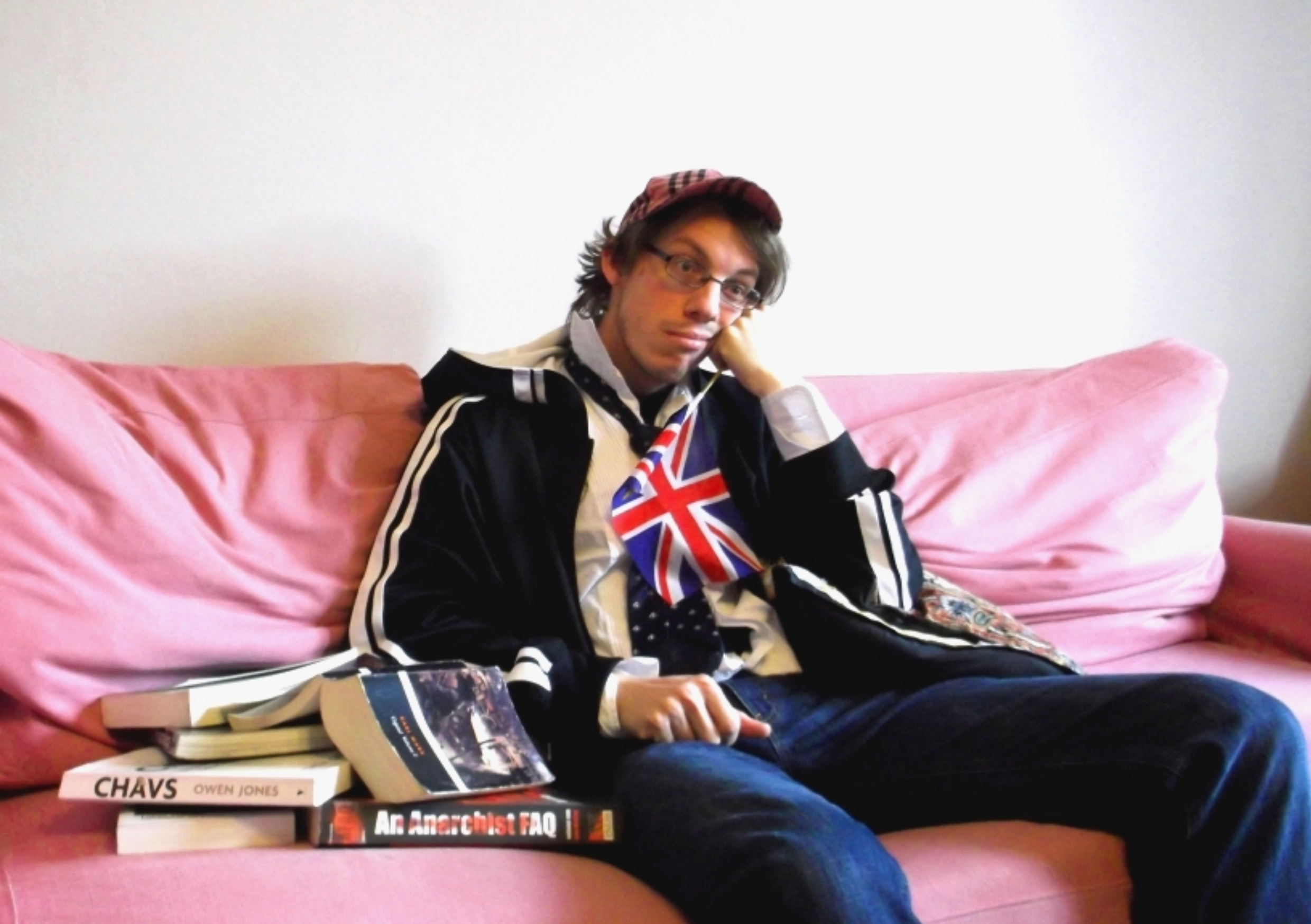
Seven Models of the Artist

Poetry, Politics, Rambles, Theatre

(a) Labourer

The artist is a worker. They work in art-factories, also known as theatres, studios, galleries, &c. They produce art for the bosses of the art-factories, which the bosses then sell for a profit. Artists deserve to be paid a wage for their labour as soon as they begin working as artists, or perhaps once they’ve completed their training or apprenticeship. The bosses and the workers are inevitably in conflict: the former wants to drive productivity up and wages down, while the latter wants to drive wages up. (Unusually for workers, artists are also often invested in increasing their own productivity.) This condition will persist until the capitalist system is overthrown by the workers’ revolution, and artists along with all other workers will be paid a living wage for their contribution to society.

(b) Entrepeneur

The artist is a self-organised business. They produce artworks, but they also develop their brand, negotiate their contracts, and promote their work and their wares to other businesses. The successful artist is one who is able to negotiate the best price for their work: this can occur through skilful self-management, through cleverly playing the art production market (e.g. being an early adopter of lucrative trends or the creator of those trends), and through producing better quality artworks. Artists are in constant competition with each other, competing for the same contracts and status. Because it is a competition, some artists will inevitably lose.

(c) Bard

The artist is the soul and memory of a society. In hierarchical societies, they will be engaged by a patron to produce artworks which commemorate great moments in the society’s or patron’s history. They may also be supported in producing unrelated artworks in order to generally enhance the reputation of the society or patron. In more egalitarian societies (or in peasant groups within a hierarchical society), an artist may be supported by the whole community: workers might feed a bard in return for entertainment, for example. The better the artworks the artist produces, the more likely they are to be supported by a patron or community. The artist may also have a mystical, spiritual or shamanistic role, with the creation of artworks enacting a connection to deeper community values.

(d) Hobbyist

The artist is an amateur. They produce artworks in their spare time. Most people are artists of some form. Some artists are lucky enough to be able to sell or trade their artworks, sometimes for quite high prices or high-value goods. This may be because the artworks they produce are particularly good, or, given that artistic quality is entirely subjective, it may be due to more complex interactions with the market of production and desire. In any case, art is a kind of ancillary economy, and producing it does not consist of work proper. Sometimes, groups of artists within a community of geography or ideology will get together to produce more large-scale artworks, like community theatre or radical zines. Sometimes artists who enjoy their work get a proper job as entertainers.

(e) Commodity

The artist is a good to be traded on the open market. Their value consists in their reputation, their portfolio, their rarity, and their ability to produce future goods. Producers, artistic directors, talent scouts and other business-people compete with each other to identify and purchase the best artists. Some business-people invest in their artists through training and professional development opportunities in order to increase their value as a commodity, on the assumption that they will get preferential treatment when purchasing the artist in future. The artist is technically in charge of to whom they are sold, but in reality this is usually dictated by the whims of the market.

(f) Self-facilitating media node

The artist is a conduit for ideas. Their role in society is not just to find out what’s happening and to tell other people about it: it’s to be what’s happening. The artist does this through making artworks, but also through expertly using social media, old media, networking events, parties, housemates, partners and so on. Maybe all of those things are artworks too. Maybe everything they do is art. The artist is both a producer and a consumer of art. They artistic practice is being really good at producing and consuming. They get paid any way they can.

(g) Scrounger

The artist is lazy. They do not want to do a fair day’s work. The artist is cunning and cons people into giving them food or money for their artworks. They spend more time thinking about ways to trick people into liking their art than they do producing art. The artist is always looking for ways to produce artworks that will trick people as quickly as they can. Their dream is to be able to do this without having to make any artworks at all. The artist does not believe in what they do. They get fed any way they can.